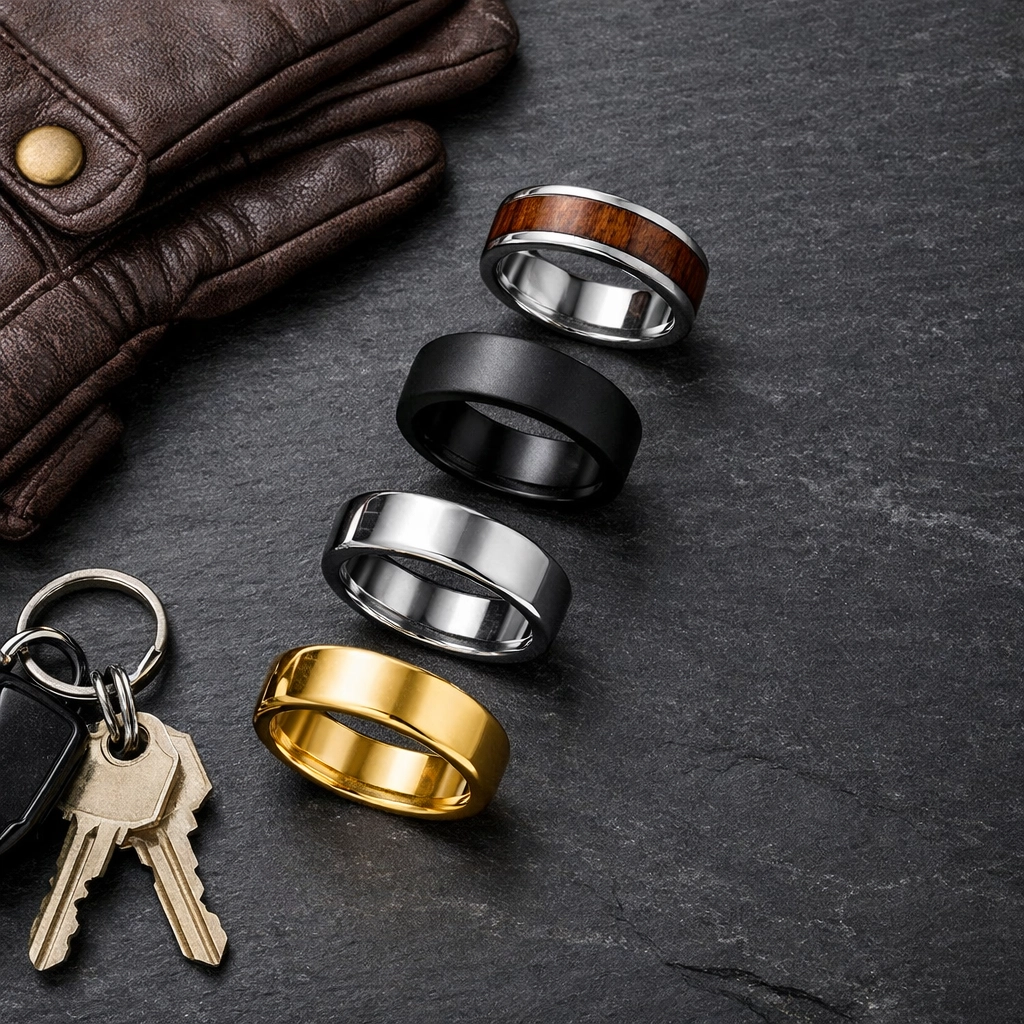
Looking to upgrade your style or finally commit to a wedding band, but not sure where it’s supposed to go? You’re not alone. While most guys just slide a ring onto whatever finger feels comfortable, the truth is that where you wear your ring sends a specific message to the world. Whether you’re signaling your marital status, your professional success, or your personal style, the hand you choose matters.
At Just Mens Rings, we believe that your jewelry should be as straightforward as you are. If you’re ready to find a ring that fits your lifestyle, check out our full collection of men's rings or dive into our guide on ring materials to see what suits your daily grind.
The "Active" vs. "Passive" Hand: A Quick Primer
Before we get into specific fingers, let's talk about the hands themselves. In the world of jewelry psychology and tradition, your hands are divided into two categories: the active hand and the passive hand.
- The Active Hand (Usually the Right): This is the hand you use to interact with the world. It represents your professional identity, your outward expression, and your physical actions. A ring on this hand is often seen as a statement of authority or achievement.
- The Passive Hand (Usually the Left): This hand is associated with your inner self, your emotions, and your personal relationships. Because it’s closer to your heart (literally and figuratively), it’s where traditions like the wedding band typically live.
If you’re left-handed, some people choose to flip these meanings, but most stick to the traditional "Right = Action, Left = Emotion" framework.
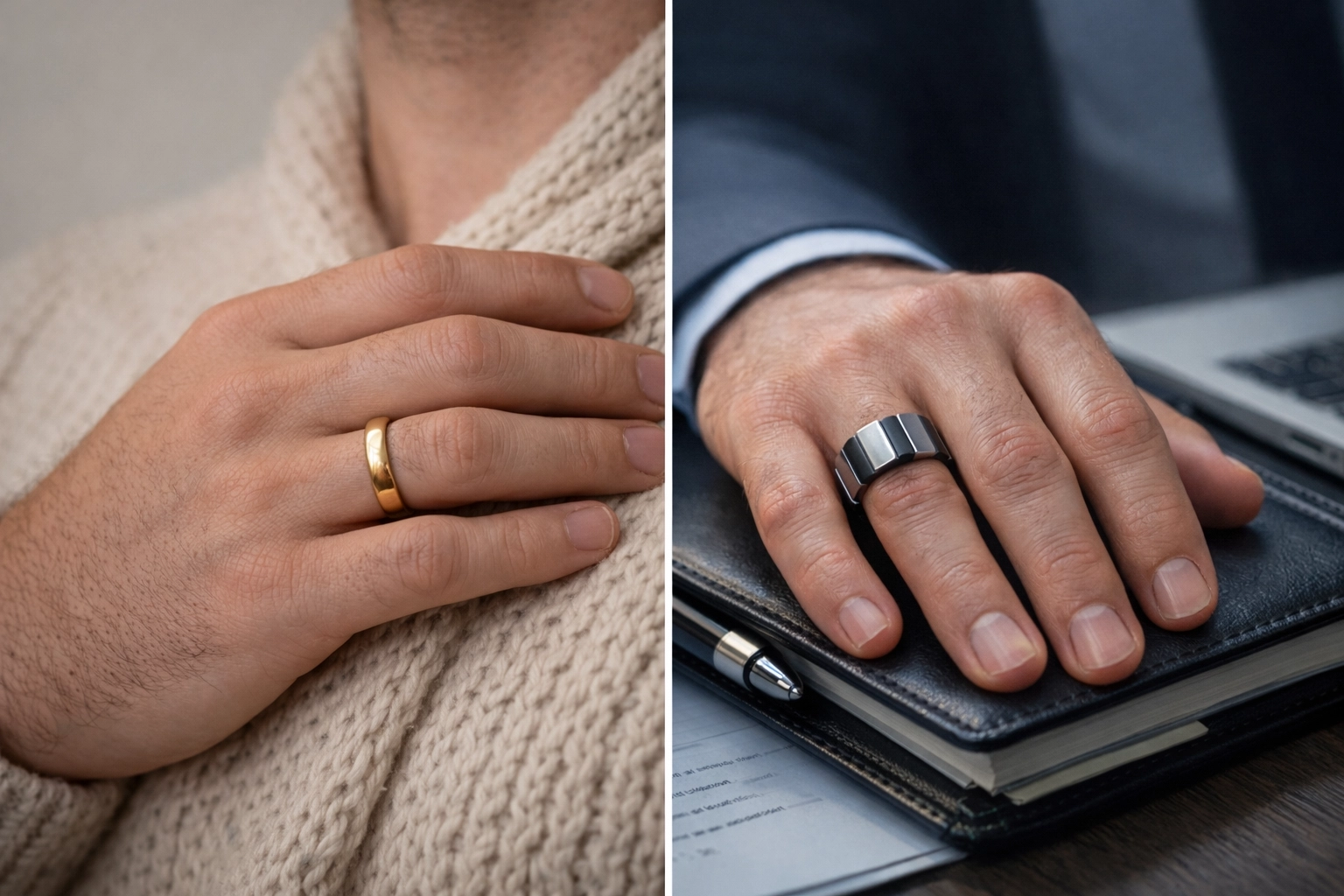
The Left Ring Finger: The Tradition of the Heart
For most men in the United States and the UK, the left ring finger is the primary "real estate" for commitment. The tradition dates back to the ancient Romans, who believed in the Vena Amoris, or the "Vein of Love." They thought a vein ran directly from the fourth finger of the left hand straight to the heart.
While modern biology has debunked the vein theory, the sentiment remains. Wearing a ring here signals:
- Marriage or Engagement: This is the universal sign that you are off the market.
- Family Values: It suggests a family-oriented personality and that you prioritize your emotional bonds above all else.
- Creativity: Some believe the left hand also represents the creative, "dreamer" side of a man’s personality.
If you are currently looking for a band that symbolizes this connection but want something more durable than traditional gold, our Tungsten Carbide collection offers a commanding presence that won't scratch or lose its shine.
The Right Ring Finger: The Statement Hand
This is where things get interesting. If you aren’t married, or if you live in certain parts of the world (like Germany, Russia, or India), the right ring finger is actually the traditional spot for a wedding band.
However, in the West, a ring on the right ring finger often signifies:
- Professional Achievement: Think of graduation rings, championship rings, or engineering rings. This finger projects outward success and milestones you’ve conquered.
- The "Right Hand Wedding Ring" Meaning: For widowers or men in certain cultures, wearing a wedding band on the right hand is a way to honor a spouse or stick to cultural roots.
- Personal Style: It’s the perfect place for a statement ring. Since it doesn't carry the "married" label in the U.S., it’s free for fashion-forward choices like Tantalum rings, which offer a unique, heavy feel and a dark, modern aesthetic.
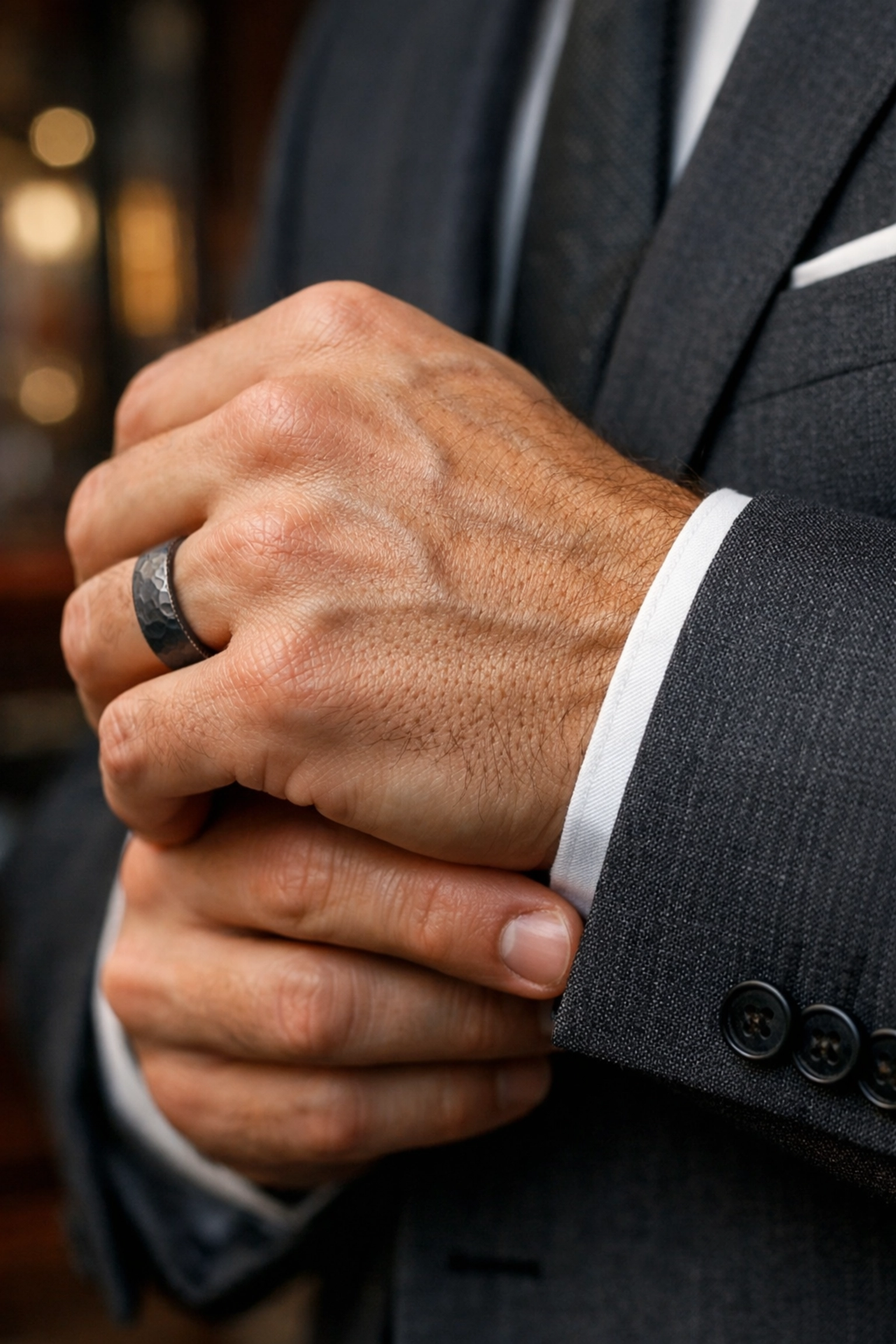
Beyond the Ring Finger: What the Other Fingers Say
If you’re moving beyond the standard wedding band, you have four other options on each hand. Each carries its own "vibe."
1. The Pinky Finger (The 5th Digit)
The pinky is for the man who isn't afraid of a little attention. It has no religious or cultural baggage in most societies, making it the ultimate spot for pure style.
- Left Pinky: Often associated with the "mob boss" or "gentleman" aesthetic. It used to be where men wore signet rings to seal documents.
- Right Pinky: Signals status and professional rank. In some countries, an engineering or graduation ring is worn here.
2. The Middle Finger (The 3rd Digit)
This is your largest, boldest finger. Because it’s right in the center, a ring here represents balance, structure, and individualism.
- The Practical Tip: Because the middle finger is next to the index finger, a bulky ring here can feel a bit awkward for daily tasks. If you go for a middle finger ring, we recommend a slender elegance or a comfort-fit band from our Cobalt collection.
3. The Index Finger (The 2nd Digit)
Historically, the index finger was the most common place for men to wear rings. It was used to display family crests or social standing.
- Modern Meaning: It represents authority, leadership, and self-confidence. If you want people to notice your ring, put it here. It’s the "look at me" finger.
4. The Thumb (The 1st Digit)
A thumb ring is a sign of power and influence. In many cultures, a thumb ring indicated wealth because it requires a significant amount of metal to create.
- Style Note: A thumb ring is a great way to add "edge" to your look without crowding your other fingers. It’s a popular choice for guys who already wear a wedding band and want to add a second ring without looking "cluttered."

Choosing the Right Metal for Your Placement
Where you wear the ring often dictates what it should be made of. If you’re wearing a ring on your active hand (the right), it’s going to take more of a beating.
- For the Active Hand: You need something that can handle the "work" part of life. Titanium rings are incredibly lightweight but tough as nails. They are perfect for index or middle finger rings where you don't want the extra weight slowing you down.
- For the Passive Hand: You can afford to go with slightly heavier or more "luxury" feeling metals like Tantalum. Since this hand is usually more protected, you can focus on the heft and feel of the metal.
If you’re unsure about which metal fits your specific job or lifestyle, our post on understanding men's wedding bands and fashion rings breaks down the pros and cons of every material we carry.

Expert FAQ: Common Ring Placement Questions
Q: Can I wear a ring on my right ring finger if I’m not married? A: Absolutely. In the U.S., the right ring finger is commonly used for fashion rings, school rings, or family heirlooms. It won't be confused for a wedding band unless it’s a very traditional gold dome.
Q: Which finger is best for a "manly" statement ring? A: The middle finger or thumb usually offers the most "masculine" look for statement pieces. They provide a commanding presence without the traditional associations of the ring finger.
Q: Do I need to worry about ring sizing being different on each hand? A: Yes! For most men, their dominant (active) hand is about a half-size larger than their passive hand. Always measure the specific finger you plan to wear the ring on. Check out our Comprehensive Sizing Guide for help getting the perfect fit.
Q: Is it okay to wear rings on multiple fingers? A: It’s your style, so there are no hard rules. However, a good rule of thumb is to leave at least one "empty" finger between rings to avoid looking like you’re wearing brass knuckles (unless that’s the look you’re going for).
The Final Word on Ring Placement
At the end of the day, the "meaning" of your ring is whatever you decide it is. Whether you're sticking to the emotional tradition of the left hand or making a bold professional statement on the right, the most important thing is that the ring fits your hand and your life.
Ready to find your next piece? Explore our best-selling men's wedding bands or reach out to our team via our Contact Page if you have questions about specific metals or custom sizes.
Don't forget: We offer a straightforward exchanges and returns policy, so you can shop with confidence knowing your perfect fit is guaranteed.